Sunday, November 28, 2010

Blueprints For Building A 2 Seater Sand Rail


I had never spoken of Scandinavian cinema and it is somewhat strange given my love for those lands and for those people and we do a small deviation for Norway. I must also admit that some 'power to write something about this movie, because it is one of those things that leaves so many ideas but are classified as private. I mean what's better than three big man brute who find themselves segregated in Greenland to discuss the greatest systems of the affective sphere to close permanently in a monolithic silence to think for themselves. Sure it made laugh a little, but the film by Hans Petter Moland is sharp, cool and lucid analysis of human contradictions as the ice sheets that surround the three main characters.

think about it, it betrays at once the literary roots of the operation and there probably much of the autobiographical story that brings the poet Henrik Larsen (Gard B. Eidsvold) to accept a job as a trapper in Greenland to find the inspiration lost. The story begins with Larsen ( 1929), the Danish book Peter Tutein , strange and mysterious figure in early twentieth-century writer who lived and died young (47 years) and who lived in Greenland really like the protagonists of the film. Also the author of a sequel Larsen vender Hjem and also active in film and screenplay with the subject of a Danish film of 1939 set amongst the eternal ice titled Nordhavets mænd (Men of the North Sea). From the little that I find on the net I think it's a family film and therefore has little to do with Kjærlighetens kjøtere instead a film that is absolutely far from conciliatory.

E 'curious to note that some films are able to disappear from the face of the earth. Yet Kjærlighetens kjøtere you can not enter into the vastness of the films that have enjoyed little distribution, as it is circulated in at least since the days of VHS video titled Zero Kelvin with which it is certainly easier to find information. Over all its director is not this total stranger, however, view his prolific and discreet substantial budget of many of his productions. Even his association with the great Swedish actor Stellan Skarsgard, present in three films he directed, would be enough to give him everlasting glory. On the contrary seems to be a pearl in the large (retired) happy island of Scandinavian cinema: a drama inspired and high set in eternal cold in the early years of last century 2.


male Intimacy is the true realm of the film, which is not a novelty question on the extremity to which they may never get to love, but so elegant and dry items dry on the subject is rare to find. In this case then it is a valuable commodity that boasts of good writing and a grandiose production. Nothing like the eternal ice of the north could make it better as the setting, perfect to let go of the theater thinking, expand your mind and seek answers to their worries. Since the young writer in search of inspiration Larsen (Gard B. Eisvold) lands in Greenland understand from the faces of his two hunting companions that future ice puts a strain on the minds of residents. Not just the obvious wounds made by ice on their faces to betray it, but it is all the gestures in the characterization of silent scientist Holm (Bjorn Sundquist) and the rogue and grezzissimo Randbæk (Stellan Skarsgard). The environment and isolation, as the hunters at the beginning of the twentieth century saw other humans only when they came to collect the goods, there has clearly forged, and the youngest Larsen is on to shape. Moland is good at making just imagine how the story will revolve around the change and the change of a confused young man.

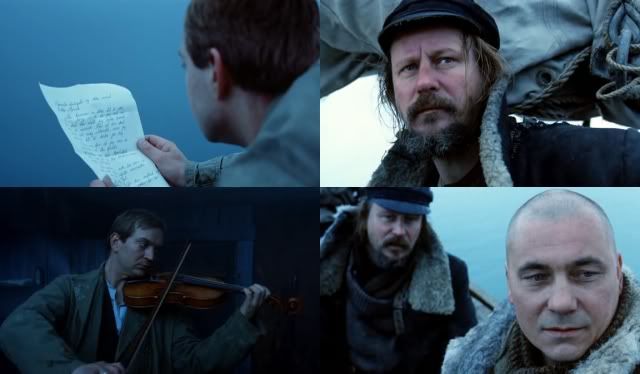
The climate that develops between the three is very heavy. And 'the good Stellan to be the driving around which the entire film. Admission is also involved in ' interview with the director confessed that he had to mediate to get close to this great actor's presence and the other Nordic Film legend Sundquist. It 'just when you face to face great performers that actors often give their best. Sundquist's interpretation of the scientist is in fact very good, with discretion and capability to history. The character itself is held outside in good order in the duality represented by Larsen and Randbæk and is at the very moment of his absence, which completely undermines the balance between the old hunter and the young writer as predictable right from the start.
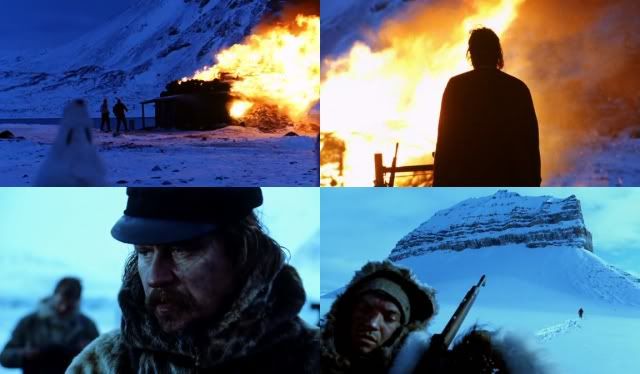

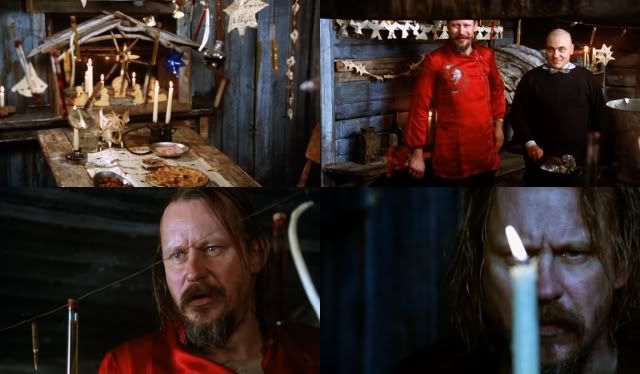
impersonation mo 'ogre of of Randbæk made good by the Swedish actor is in fact considerable and reaches deviant tones and alienating when trying to reconcile with Larsen organizes a grotesque Christmas party. Slung in a Chinese red silk blouse discover the traveler to the East, with divinatory and visionary power. At this point we would have to open a small parenthesis on instinct by explorers of the ancient Scandinavian people, but I try not to dwell passage citing the fact that costume just in those places from a solo to the other end of the world as well as live in total isolation for his own choice. What is demonstrated by their extensive history in this regard is that the peak in the epic tales of exploration typical of those lands, legends mixed with history and myth as the Grœnlendinga saga, the saga Eiríks rauda and and Vinland Sagas glorification of the heroic passengers as Erik Thorvaldsson (Henry the Red) or Leif Ericson . That is to say what the short journey, the extreme conditions and the hermitage are real breeding ground for those people where, as does also show the film, the misanthropy and misogyny may even rise to infinite power.
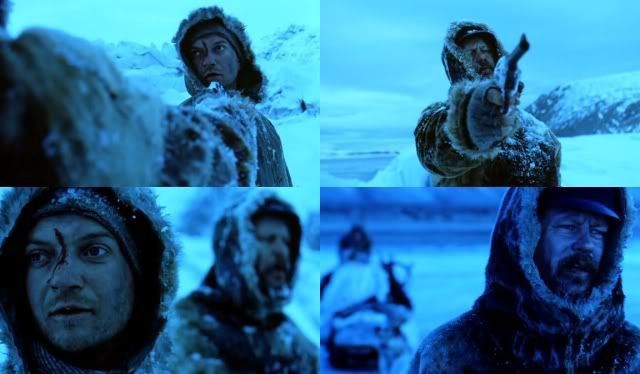

does not reveal anything of the reasons that made Randbæk sterile and bad, always ready to harass the young man and tell him in the crudest of ways that it is wrong to love a woman a sea far away from him and useless read his farewell letter that speaks of an unlikely expectation. Randbæk The writer sees in the dark abyss of his own doubts, his frailty as a male, the vivid resentment that could get to try a man betrayed, and the total devastation that can bring about the end of a relationship. The continued progression of the inevitable tension between the two leads desperate climax in the snow all makes use of a blue twilight and the sum Moland praise for making these images on film. Does not reveal even the ending, but I would at least mention the crying of Larsen in games played and finished, a clear sign of surrender to Randbæk. What I wanted to avoid until the end becomes a reality, the replacement of the persecuted and the persecutor, between good and evil, between hero and defeat the monster is known to occur. The sense of inevitability is made as strong as a punch in the stomach and perhaps we should all weep for what could be miserable human nature.

Technical
Kjærlighetens kjøtere
Year: 1995
Director: Hans Petter Moland
Subject: Peter Tutein
Screenplay: Lars Bill Lundholm & Hans Petter Moland
Cast: Stellan Skarsgård
Randbæk
-Gard B. Eidsvold - Henrik Larsen Bjørn Sundquist
- Jakob Holm
Camilla Martens - Gertrude
Paul-Ottar Haga - Official
Johannes Joner - Men of the company Erik
Øksnes - Captain
Lars Andreas Larssen - Judge
Juni Dahr
Johan Rabaeus
Frank Iversen
Tinkas Qorfiq - Jane

1. The trapper or trappers are the center of the film. To this I can not recommend to anyone who is particularly sensitive to images of dead animals.
2. Probably the adaptation is very faithful the novel. The costumes you see in a few scenes set in Greenland are not precisely in that period and in a newspaper one of the main characters learns of the last days of Lenin. In fact, the film was shot in the large Danish island in the North Sea, but in smaller, though no less cold Svalbard is Norwegian as the film itself.

Saturday, November 13, 2010

Portable Car Battery Charger Walmart


Some time ago I introduced the figure of the Llorona trying to figure out the return of this continuous spectrum of women in various incarnations to infest the whole Mexican culture including books, movies and music. Syncretism between the pure fascination of its attractive appearance of a woman and her intentions to use moralistic folklore in the city meant that the story has spread throughout the South American cone and present characters similar to other legends of the globe. In fact, as I have repeatedly tried to highlight in the Mexican variation of this archetype has been strongly influenced by colonial history and even politics. This detail is not negligible even when you go to see a movie like The Maldición De La Llorona. Although the film has no political intent, historical or symbolic and just wants to trace the stylistic features of contemporary European cinema gothic is singular to note that the factors mentioned have infiltrated congruence with the truth. What interests me as usual is not making a sterile film criticism, but understand it and get to the heart of the matter. As a naive to the law itself may seem a reshuffling of old beliefs around the world or take the form of the narrative of man's innate fears, for many, this film is branded as an adaptation to the soil of its Central European counterparts. Obviously, this simplistic interpretation I is not well at all and I will try to dig up a work certainly not essential, but enjoyable, and to all intents and purposes part of the cinematic history of that country.


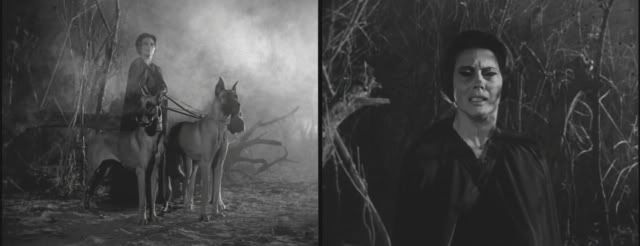
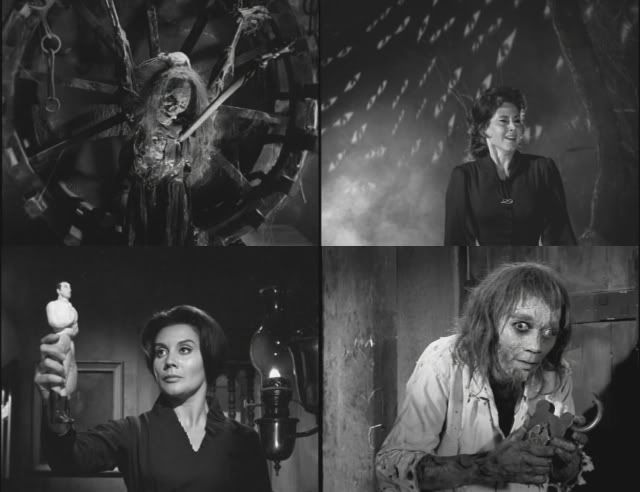
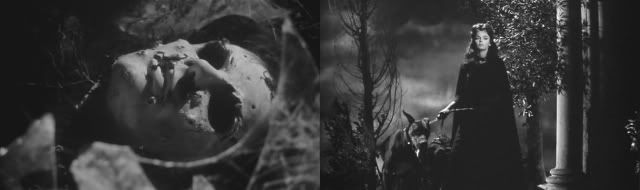
The film also released in the U.S. market in a dvd now unavailable, on behalf of the celebrated label never too Casanegra with the title of The Curse of the Crying Woman was born as a genuine attempt at South American Gothic. Although the estimators Mexican horror give proper emphasis to the unique character and cultural journey well separated from the rest of the world of local authors, there is no denying that this film is due for some ideas with a lot of contemporary European cinema. It is not in fact a most relevant example of the singularity represented by the Mexican horror film, because it shows several points of overlap with a classic Gothic ours. The representation Llorona with the dogs in tow, dressed in black who wanders through the fog, it can not be random, as well as the general atmosphere made of mist and cars whizzing through the night are quite unusual for the South American cinema.


The direct reference is with The Mask of the Demon (1960), the classic directed by Mario Bava, that as time goes on we discover what was most influential in the horror cinema all countries in which it was distributed. Singular is the short for which he always found myself talking as inspired by the story of Gogol that I fully spoken several times on this blog . This is also why I felt it right in full, because my memory had been buried at the bottom so much that I doubt whether I had never seen. Well, some distinctive features, have been taken so obvious, from the aforementioned look lady in black Llorona (Rita Macedo), which is the same as in the film Bava Barbara Steele, as well as the Great Danes on a leash by both actresses in their first shot. Added to this is also the part, I was very impressed in the Mexican film, Eye of the cable spectrum. This detail is also significant in Maldición and was probably an image of such power to strike even the Mexican director.


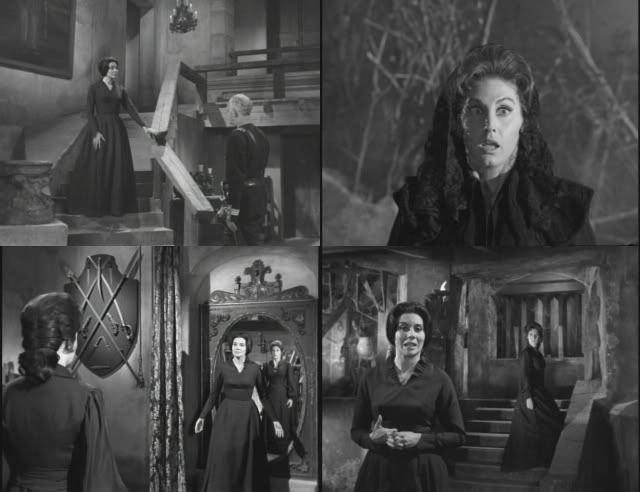
Director Rafael Baledón has therefore taken some elements of another film and tried to decline according to their culture. This process of regionalization of the product is more common than you think in the history of cinema and it is often to make up for the shortcomings of the product exported nell'attecchire the local public. It 'clear that the Llorona that Mexicans know as children would certainly have been most successful in those places compared to a witch of the Russian steppes led by an Italian. It would also be unfair to compare the two films, as that ours is hard to beat the master at the technical level. His proverbial camera movements and his well-known visual experiments in photography are now all the wealth of world cinema and they were so advanced, as is well known that his skill was recognized with shameful delay in our country. It would therefore be unfair to expect the moon from Baledón good while. It has directed much of school, it gives us a film that is delightfully close to the classic British Hammer pictures of the theatricality of the frame and for exploitation of the interior.


One might ask then what is so Mexican this is considered in all respects one of the best classics of the gothic genre. The answer is not in the linear plot concerns a family curse, common to many other Gothic tales, by which the poor Amalia (Rosita Arenas) has to deal, but first of all in the very presence of the Llorona. As mentioned above one can not ignore the history of the figure, because the ghost in this film is easily merged with the figure of Malinche. In the didactic story that makes the possessed Aunt Selma (Rita Macedo) shows a portrait of a woman clearly Azteca and appealed precisely Doña Marina. Symptomatic of the typical vision of the sixties are the words spoken by Macedo:
"It was scary because he wanted power. All sacrificed to achieve it. Even despised love. "
are fully in line with the mixture of fascination and hatred for an unnatural mother and it would be difficult to understand what I mean, if you was aware of the story. You can then give up the aesthetic features of traditional ghost clad in white, but not to its more intimate nature that is alive in the education of every Central. You can not separate the tragic story of the creature, as you will ever insist on foreign characters, not least the attempt to bring it back to life in ways similar to those of the witch from The Mask of the Demon or subtracting the lives of young women for a new reincarnation.


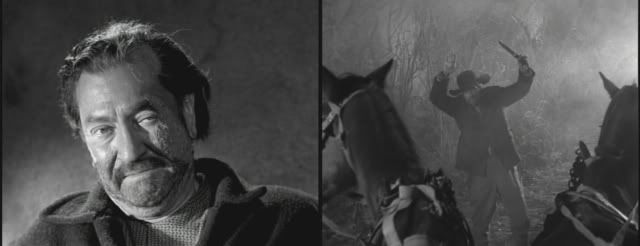
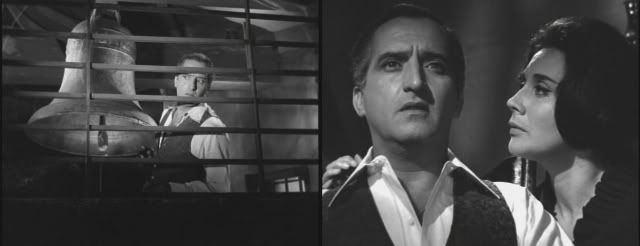
The film is then typically Mexican even make a special milkshake all over the film and psychotron available in those years. You throw in a Gothic mansion in the Mexican desert, hypnotism made Voodoo dolls, a lame man with his face disfigured servant, played by the great Carlos López Moctezuma favorite actor for the roles of villain, and not least a wonderful monster in the attic trick. Call missing a few wrestlers, but obviously he undermined the success of the film and not be said that the directors of these films were not aware of the pop factor and irony of their presence in the films. Among the actors feel I have to quote bambacione Abel Salazar, subscriber horrific roles in those years and which will certainly come back, who plays the husband of Rosita Arenas, and in a brief role Julissa known Mexican pop star and performer of popular telenovelas, like as one of the first cuts of that Wild at Heart (Corazón salvaje ), who went mad in the version of the 80's here too.


Technical
The maldición de la Llorona
Year: 1963
Directed by: Rafael Baledón
Screenplay: Rafael Baledón, Fernando Galiana
Cast:
Rosa Arenas - Abel Salazar Amelia
- Jaime
Rita Macedo - Selma
Carlos López Moctezuma -
Juan Enrique Lucero - Dr. Daniel Jaramillo
Julissa - female passenger of the coach (as Julissa del Llano)
Roy Fletcher
Arturo Corona
Armando Acosta - Other passenger
Victorio Blanco ;
Beatriz Bustamante - Witch


1. In fact, the cable eye and torture of the eyes themselves are a bit 'Baviana an obsession and it returns the whole of the film from when they begin to fill and pulsate with white, while the witch tries to return life to as to eliminate the vampire must pierce the eyes. These particular strike me deeply because I have deep anxiety whenever they are targeted in the eyes of scary movies. Following two catches by Italian film, released in South America with the title of the devil Mascara, which should dispel any doubt as to the borrowing of ideas in the Mexican film.


2. In this regard I have found some significant covers made by the great Jose Guadalupe Posada a series of Mexican history books for children written by Heriberto Frias. Here there are a couple dedicated to the key figure of Malinche, but also another in a classic event in the history of colonialism or the fall and destruction of Tenochtitlan (capital of the Aztec Empire) by the English invaders, who was heralded by the appearance of a woman dressed in white according to the commentaries of the time, shouting desperately seeking their children just like the Llorona. This is to underline how the historiography and the political will of the Mexican nation were very strong in shaping the culture to come.